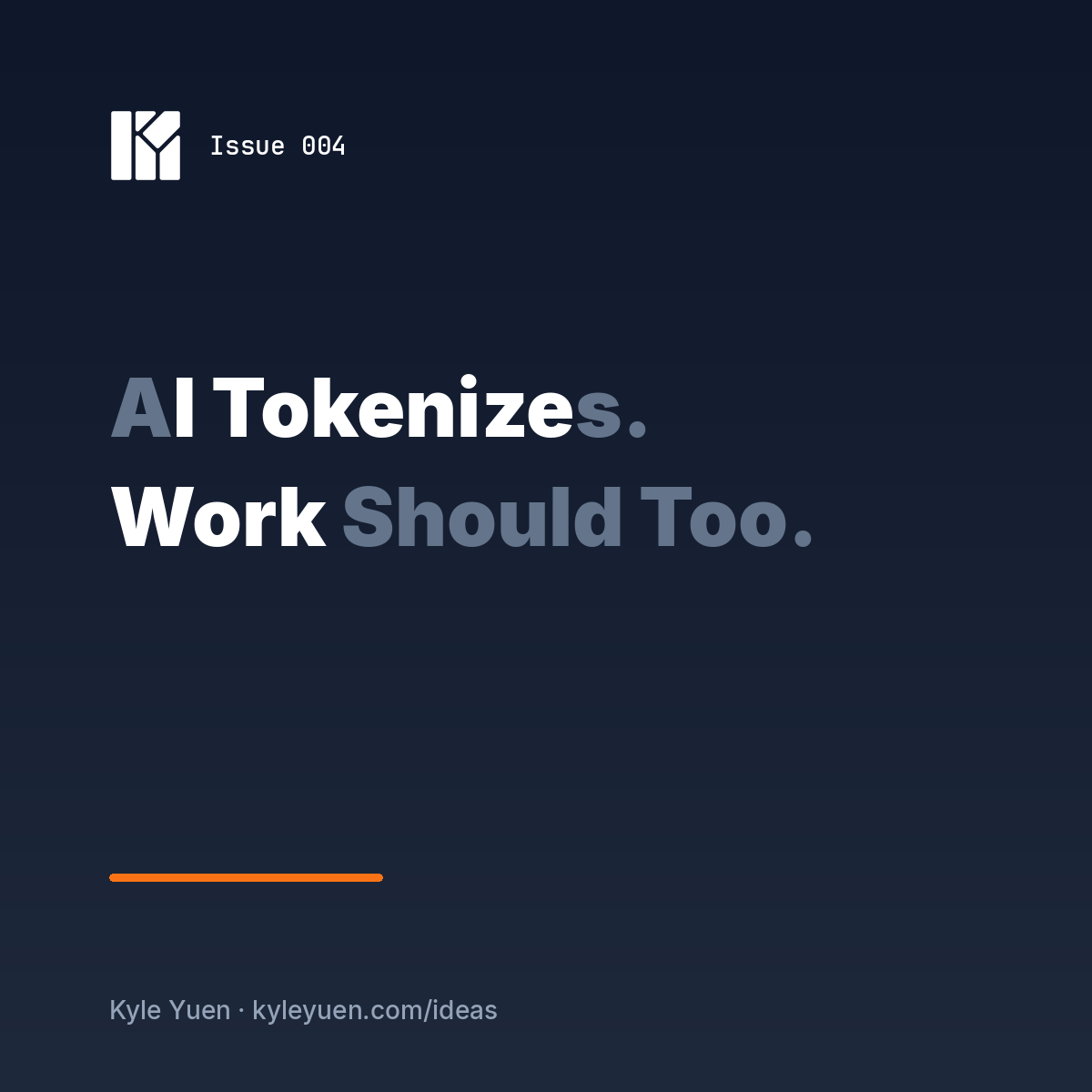
AI does not read sentences the way we do. It breaks them into tokens — small units it can count, compare, and transform — before it decides what to do next. That step is not a detail. It is the reason AI can handle complexity without getting confused.
Work should be treated the same way. Not because jobs are like language, but because a whole role is too big to make good decisions about.
Most organizations do the opposite. They look at a job, see a person doing many things, and ask what tool can replace them. They automate the surface of the role without breaking it apart. The result is faster confusion, not faster output.
From one role to many pieces
Every role is made of smaller units: tasks, workflows, and decisions. Some of those units should be automated. Some should be handled by an AI agent. Some should stay human. And some should be removed entirely.
You cannot make those calls while looking at the role as one big block. You have to break it into pieces first.
Five possible owners
Once the work is in pieces, each piece gets one owner:
- ⚙️ Automation — The rules are clear, frequent, and low-risk. A machine should run them end to end.
- 🤖 AI agent — The situation is ambiguous but reversible. A system can act, then ask or log.
- 🧑 Human — The decision requires accountability, relationships, or judgment under uncertainty.
- 🔀 Hybrid — A system drafts or routes, and a human confirms. This covers most high-value workflows.
- ❓ Pending — No one can decide yet. The piece needs more analysis before ownership is assigned.
Guessing ownership is worse than delaying it. A pending label forces a real decision later. A wrong label hides a bad decision inside a process.
Why this matters now
AI makes it possible to automate almost any visible task quickly. That is dangerous if the task was never useful in the first place. When you automate a whole role at once, you preserve every workaround, handoff, and outdated step inside it.
Breaking work into pieces first exposes what is actually happening. It shows you where information gets carried by humans who do not need to be involved. It shows you where decisions depend on judgment, and where they are just pattern matching. It shows you what is worth keeping and what is worth deleting.
A simple way to start
Pick one role. List the recurring tasks. Group them into workflows. Mark where decisions happen. Then assign an owner to each unit.
The goal is not fewer people. The goal is the right owner for every piece of work — before any tool is bought or built.
Frameworks worth knowing
- Task analysis — breaking work into observable units to understand what a job actually requires.
- Value stream mapping — tracing which steps add value and which only add time.
- Human-centered work design — redesigning work around the decisions, relationships, and exceptions that genuinely need people.
AI tokenizes language because it cannot think in paragraphs. Organizations should break work into pieces because they should not automate roles they have not understood.
Disclosure: This article was written with help from an AI assistant.